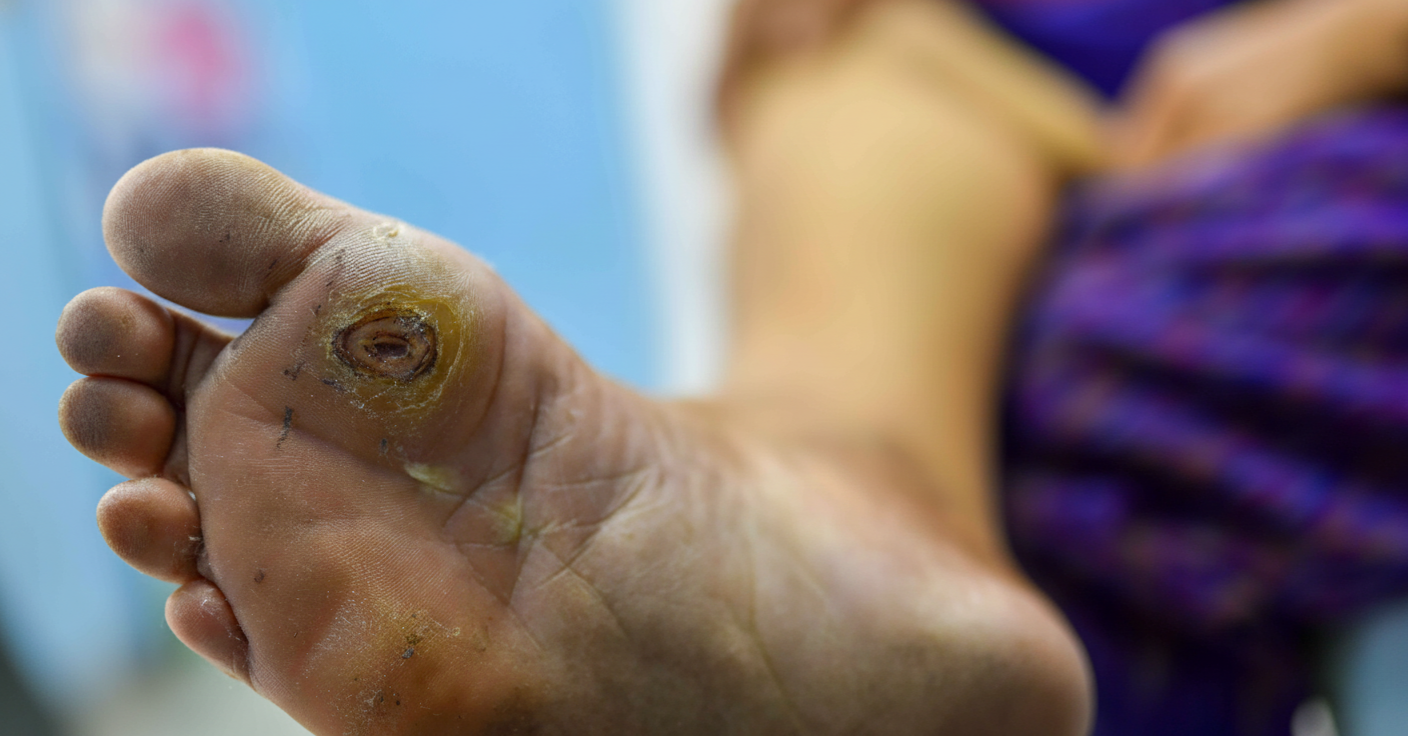
Diabetes can significantly affect foot health, increasing the risk of complications such as neuropathy (nerve damage), poor circulation and foot ulcers. At Rashtrotthana Hospital, we emphasize the importance of proactive diabetic foot care to prevent serious complications and preserve mobility and quality of life. Understanding diabetic foot wounds and knowing how to manage them can make a critical difference for individuals living with diabetes.
What is a Diabetic Foot?
A diabetic foot refers to any foot problem that occurs as a complication of diabetes. Diabetes can damage nerves (neuropathy) and blood vessels, which reduces sensation in the feet and slows healing. This makes the feet more vulnerable to injuries, infections and ulcers.
Why Diabetic Foot Care Matters
Diabetes impacts nerves and blood vessels in the feet, which can lead to:
- Reduced sensation (neuropathy)
- Poor circulation
- Delayed wound healing
These factors increase the risk of foot problems, including:
- Foot ulcers – open sores that may become infected
- Infections – which can worsen rapidly without treatment
- Charcot foot – weakening of the bones in the foot
- Amputations – in severe, untreated cases
Regular foot care, early detection and timely medical intervention are essential to prevent complications and maintain overall foot health.
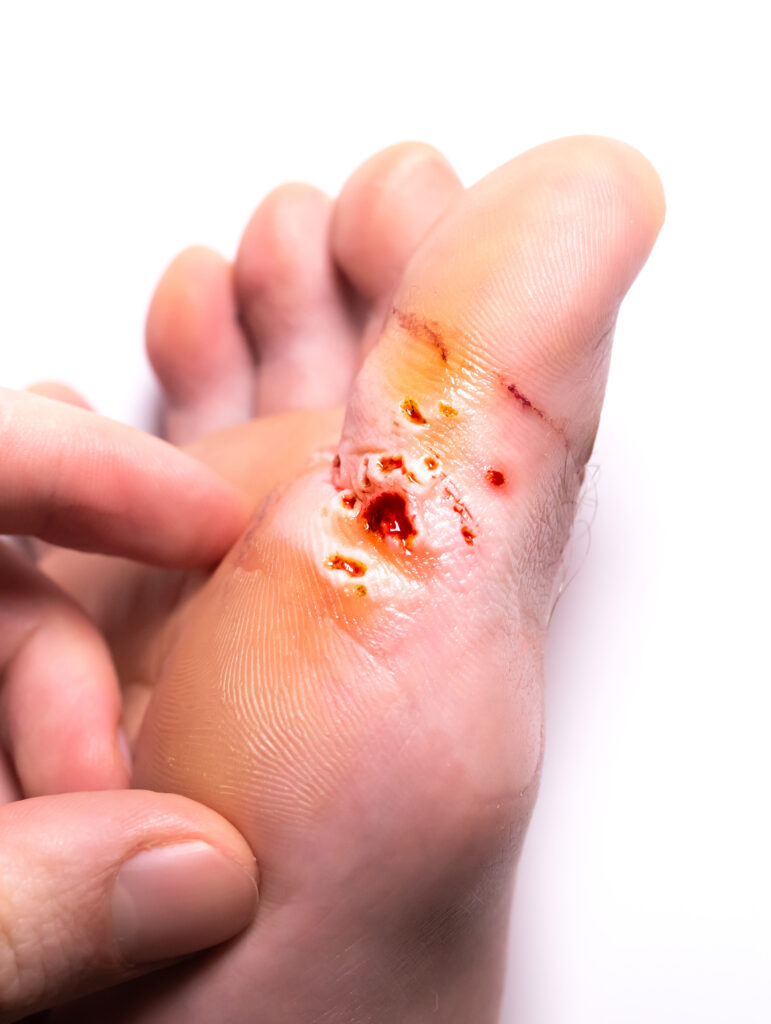
Types of Diabetic Foot Wounds:
Understanding the types of diabetic wounds is essential for effective treatment and management.
1. Diabetic Foot Ulcers
These are the most common diabetic wounds, often appearing on pressure points such as the heels, balls and sides of the feet. They develop due to neuropathy, trauma and excessive pressure. Early treatment is essential to prevent infection and reduce the risk of amputation.
2. Diabetic Neuropathic Wounds
Nerve damage reduces protective sensation, making it difficult to notice injuries. Neuropathic wounds often present as blisters, calluses, or corns. Specialized care is required to prevent infection and promote healing.
3. Ischemic Wounds
Caused by reduced blood flow due to peripheral artery disease (PAD), ischemic wounds heal slowly and are prone to infection. Multidisciplinary care, including vascular specialists, is often necessary for effective management.
When to Seek Immediate Medical Attention
Contact a healthcare professional promptly if you notice:
- Persistent foot pain or discomfort
- Redness, swelling, warmth, or tenderness
- Non-healing sores, cuts, blisters, or calluses
- Ingrown toenails or fungal infections
- Changes in skin color or temperature
- Numbness, tingling, or burning sensations
- Difficulty walking or changes in foot shape

Preventing Diabetic Foot Wounds
Preventing diabetic foot complications starts with awareness and daily self-care:
- Inspect your feet daily
- Maintain good hygiene and nail care
- Wear proper footwear
- Control blood sugar levels
- Avoid smoking and maintain a healthy lifestyle
Education and early intervention are key. Working closely with your healthcare professionals ensures early detection and effective management.
Diabetic Foot Clinic: Specialized Care for Your Feet
At Rashtrotthana Hospital, our Diabetic Foot Clinic is dedicated to the prevention, management and treatment of foot complications in individuals with diabetes. Diabetes can make your feet more vulnerable to ulcers, infections and poor circulation and specialized care is often necessary to prevent serious complications. Our clinic provides comprehensive services designed to protect your mobility and quality of life.
What We Offer:
- Comprehensive Foot Assessment
- Detailed evaluation of your feet, including skin condition, nails, circulation and nerve function.
- Early detection of neuropathy, ulcers, deformities and infections.
- Detailed evaluation of your feet, including skin condition, nails, circulation and nerve function.
- Advanced Wound Care
- Treatment of diabetic foot ulcers, neuropathic wounds and ischemic wounds.
- Use of advanced dressing techniques, debridement and offloading strategies to promote healing.
- Treatment of diabetic foot ulcers, neuropathic wounds and ischemic wounds.
- Custom Footwear and Orthotics
- Provision of shoes and insoles designed to redistribute pressure and prevent foot injuries.
- Guidance on selecting appropriate footwear for daily activities.
- Provision of shoes and insoles designed to redistribute pressure and prevent foot injuries.
- Patient Education and Self-Care Guidance
- Teaching proper daily foot care routines, hygiene and monitoring for early warning signs.
- Advice on blood sugar management, lifestyle habits and circulation-promoting exercises.
- Teaching proper daily foot care routines, hygiene and monitoring for early warning signs.
- Multidisciplinary Approach
- Collaboration between podiatrists, diabetologists, vascular specialists and wound care nurses.
- Personalized treatment plans based on the severity of your condition.
- Collaboration between podiatrists, diabetologists, vascular specialists and wound care nurses.
- Regular Follow-Ups
- Scheduled check-ups to monitor foot health and prevent complications before they become serious.
- Support for long-term foot care and maintenance.
- Scheduled check-ups to monitor foot health and prevent complications before they become serious.
Your Foot Health Matters
A dedicated Diabetic Foot Clinic ensures that patients receive specialized care tailored to the unique risks associated with diabetes. Early detection and proactive management can prevent ulcers, infections and in severe cases, amputations. Regular consultations, patient education and professional monitoring help maintain foot health and improve overall quality of life. At Rashtrotthana Hospital, we are committed to guiding and supporting you every step of the way.Diabetic foot wounds, including ulcers, neuropathic wounds and ischemic wounds, are serious but manageable with proper care. Prioritizing foot health, practicing preventive measures and seeking timely medical attention can significantly reduce the risk of complications and help you maintain mobility and independence.
Book Your Consultation
At Rashtrotthana Hospital, our Diabetic Foot Clinic is led by Dr. Sameer M. Halageri, an expert in diabetic foot and limb salvage care.
Consultation with Dr. Sameer M. Halageri
Every Tuesday & Saturday, 9:00 AM – 11:00 AM
Call 080 6923 9999 to book your appointment
Take proactive steps today to protect your feet and prevent serious complications. Our expert team is here to guide and support you every step of the way.
Leave a Reply