
Asthma is a chronic condition that affects the airways, causing them to become inflamed and sensitive. When these airways react to triggers like dust, smoke cold air or infections, they become narrow and filled with mucus, making breathing difficult. Symptoms such as wheezing, coughing, tightness in the chest and shortness of breath can interfere with day-to-day life. Although asthma is a long-term condition, it can be effectively managed with timely medical support and lifestyle adjustments.
Asthma Causes
Asthma develops due to a combination of genetic, environmental and immune-related factors. Some of the most common causes include:
1. Genetic predisposition
If asthma, allergies or eczema run in the family, the chances of developing asthma are higher.
2. Overreactive immune system
People with asthma have airways that react strongly to triggers, causing inflammation and narrowing.
3. Environmental exposures
Early childhood exposure to allergens, pollutants or viral infections may increase the risk of asthma later.
4. Allergic tendency
Conditions like allergic rhinitis or sinusitis often coexist with asthma.
5. Respiratory infections
Frequent infections, especially during early childhood, can make the airways more vulnerable.
6. Occupational exposure
People working in environments with dust, smoke, chemicals or fumes may develop asthma due to repeated irritation of the airways.

Who Gets Affected by Asthma?
Asthma can affect anyone, but certain groups are more prone to developing it.
1. Age Groups at Risk
- Children (5–14 years) – Asthma often begins in childhood due to allergies and early immune development.
- Young adults – Triggers like pollution, stress, exercise and smoking may worsen symptoms.
- Older adults – Respiratory infections and long-term exposure to irritants increase risk.
- Asthma is not restricted to any single age group – both children and adults can develop or continue to experience asthma throughout life.
How Asthma Affects Your Airways
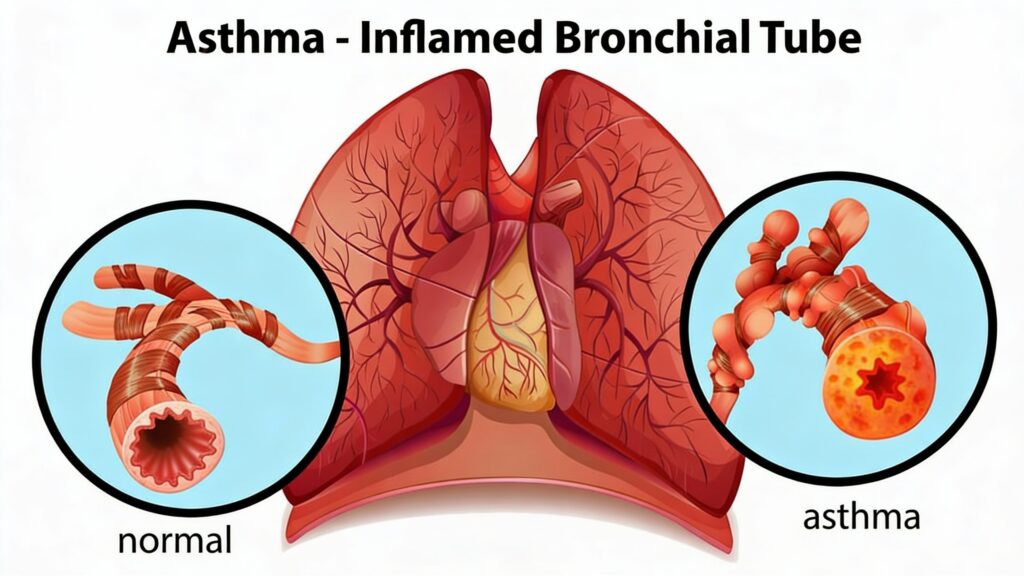
When a trigger enters the airway, three things occur:
- The airway lining becomes inflamed
- Muscles around the airway tighten
- Excess mucus forms inside the airway
This combination narrows the breathing passage, making every breath feel like a struggle. Managing inflammation is the key to long-term asthma control.
Common Asthma Triggers

Triggers vary from person to person, but the most common ones include:
- Dust mites, pollen, mold and pet dander
- Air pollution and cigarette smoke
- Cold weather or sudden temperature changes
- Strong odors and chemical fumes
- Viral infections
- Exercise
- Emotional stress
Knowing and avoiding personal triggers is one of the strongest tools for preventing flare-ups.
Symptoms You Should Not Ignore
- Shortness of breath
- Wheezing
- Persistent cough
- Chest tightness
- Difficulty exercising or climbing stairs
If symptoms worsen suddenly, it may lead to an asthma attack, which requires urgent medical care.
Diagnosis & Tests
Asthma is diagnosed using:
- Symptom review and medical history
- Spirometry to check lung function
- Peak flow measurement
- Allergy testing
Early diagnosis ensures better long-term control and fewer flare-ups.
Treatment & Long-Term Management
A comprehensive asthma plan generally includes:
1. Controller Medications
Daily steroid-based inhalers reduce inflammation.
2. Rescue Inhalers
Provide quick relief during breathing difficulty.
3. Trigger Management
Avoiding allergens, pollution and infections lowers the intensity of symptoms.
4. Asthma Action Plan
A personalized plan helps you know how to respond when symptoms worsen.
Living with Asthma
With proper care, people with asthma lead active and fulfilling lives. Simple habits like maintaining a dust-free home, using inhalers correctly, staying physically active and visiting your pulmonologist regularly make a huge difference.
Asthma Care at Rashtrotthana Hospital
At Rashtrotthana Hospital, RR Nagar, our Pulmonology Department focuses on comprehensive and evidence-based asthma care. From advanced lung function testing to long-term management and emergency treatment, our team ensures complete respiratory support for every patient.
We provide:
- Lung function tests (spirometry)
- Allergy evaluation
- Inhaler technique training
- Emergency respiratory care
- Long-term monitoring and guidance

Your Pulmonology Expert – Dr. Kolla Vinod
Dr. Kolla Vinod, Consultant Pulmonologist at Rashtrotthana Hospital, brings deep expertise in asthma, COPD, respiratory infections and allergic lung diseases.
He is known for:
- Clear explanation of the condition
- Accurate diagnosis with advanced tests
- Patient-focused asthma management plans
- Guidance on lifestyle, inhalers and long-term care
His caring approach and clinical precision make him one of the trusted pulmonologists for asthma patients in RR Nagar.
Your Health, Our Priority
Asthma may be a long-term condition, but with the right medical guidance, it is completely manageable. Early diagnosis, proper inhaler use and continuous follow-up ensure better lung health and fewer flare-ups.
If you or someone you know is experiencing
persistent cough, breathlessness or suspected asthma symptoms,
don’t ignore it – early care can prevent complications.
Leave a Reply