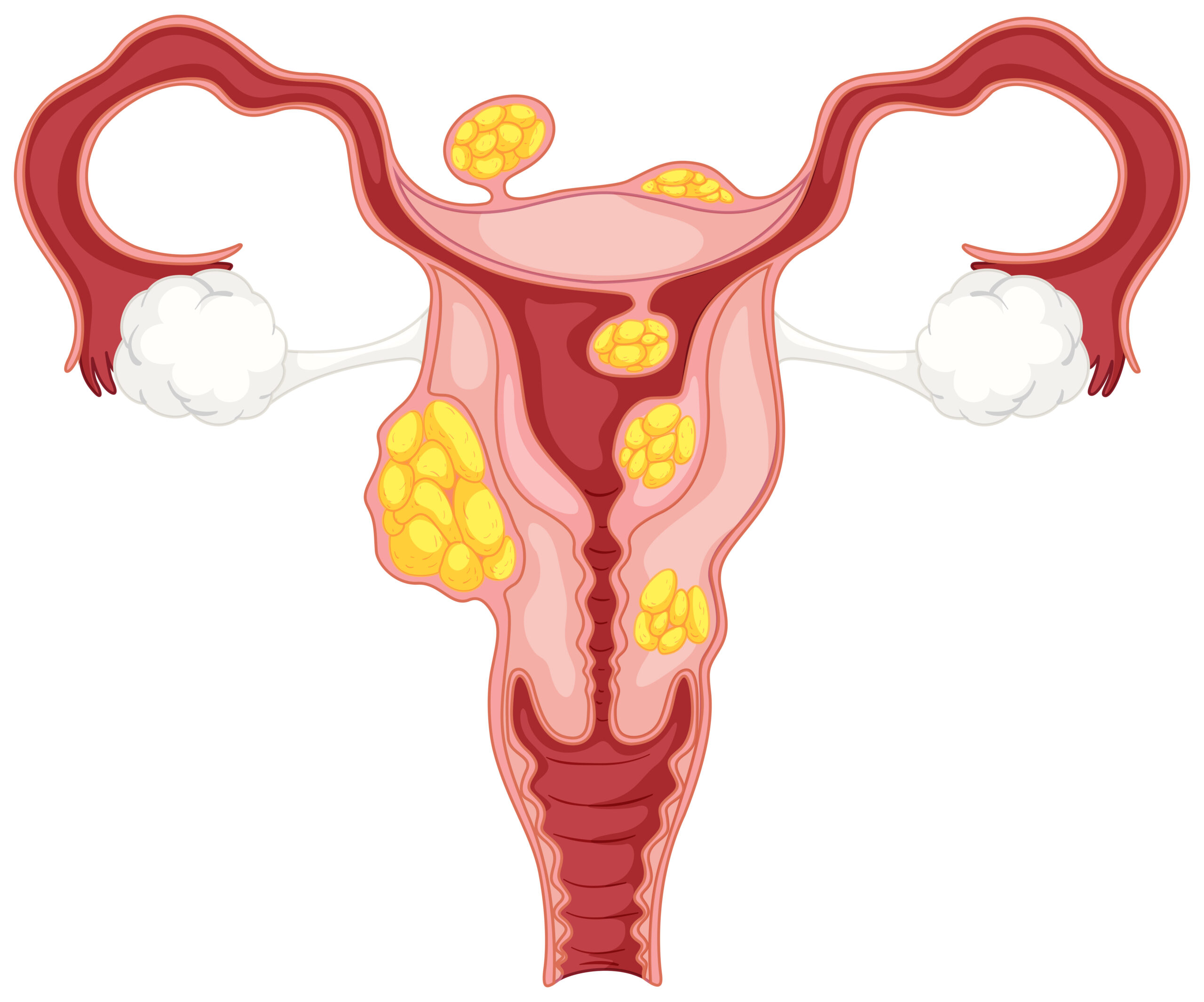
Fibroids in the uterus or uterine fibroids, are tumors that develop in or on the walls of the uterus. They are not typically cancerous. They do not always cause symptoms but can cause pain and bleeding.
What are Fibroids?
Fibroids are growths found in or on the walls of the uterus, consisting of smooth muscle cells and connective tissue. They can range in size from as small as an apple seed to as large as a grapefruit and they may even grow larger over time. Fibroids are more prevalent between the ages of 30 and menopause onset; they typically shrink after menopause.
The exact cause of fibroid formation is unclear, but they often develop in response to higher estrogen levels. It’s important to note that fibroids can sometimes resemble a rare form of cancer called leiomyosarcoma.
Types:
The classification of a fibroid depends on its location in the uterus.
The three main types are:
- Subserosal fibroids: These are the most common type. They grow on the outside of the uterus.
- Intramural fibroids: These grow inside the muscular wall of the uterus.
- Submucosal fibroids: These grow into the open space inside the uterus.
Symptoms:

Most fibroids do not cause any noticeable symptoms. However, some can cause significant discomfort.
The symptoms can include:
- Heavy periods, also known as menorrhagia, which can lead to anemia
- Painful periods
- Lower backache or leg pain
- Constipation
- Discomfort or a feeling of fullness in the lower abdomen, especially in the case of large fibroids
- Frequent urination
- Pain during sexual activity, also known as dyspareunia
Some people may have fertility problems associated with fibroids. Fibroids may cause problems during pregnancy and labor and they increase the chance of needing a cesarean delivery.
Causes:
The exact cause of fibroids remains unclear. However, several factors may contribute to their development.
- Fluctuating estrogen levels during reproductive years can lead to the development of fibroids.
- High estrogen levels, such as during pregnancy, cause fibroids to swell, while low levels, as in menopause or certain medication use, may result in shrinkage.
- Genetic factors contribute, with individuals having close relatives with fibroids at higher risk.
- Certain dietary factors like red meat, alcohol and caffeine consumption increase the risk of fibroids, while higher intake of fruits and vegetables may lower it.
- Overweight and obesity increase the risk of fibroids.
- Childbearing lowers the risk, with each childbirth decreasing it further.
Diagnosis:
The following diagnostic tests can help a doctor detect fibroids and rule out other conditions:
- Ultrasound scans: These scans create images of the uterus by scanning over the abdomen or inserting a small ultrasound probe into the vagina. Both approaches can detect fibroids.
- MRI Scans: MRI scans determine the size and number of fibroids.
- Hysteroscopy: This procedure uses a small device with a camera to examine the inside of the uterus. Doctors insert the device through the vagina and into the uterus via the cervix. If needed, they may take a biopsy to check for cancer cells.
- Laparoscopy: In this procedure, doctors insert a small, lighted tube into a small incision in the abdomen to examine the outside of the uterus and surrounding structures. A biopsy may also be taken if necessary.
- Fibroids may not always cause symptoms, so doctors may not detect them until conducting a routine pelvic examination.
Treatment:
Most fibroids do not require treatment if they don’t cause symptoms and often shrink or disappear after menopause.
For symptomatic fibroids, various medical treatments are available depending on symptoms, severity and location.
Medication is often the first line of treatment:
- GnRH agonists reduce estrogen and progesterone production, shrinking fibroids. They can cause menopause-like symptoms and are used short-term or before surgery.
- Nonsteroidal anti-inflammatory drugs (NSAIDs) like ibuprofen can relieve pain but don’t reduce bleeding.
- Hormonal birth control helps regulate ovulation and may reduce pain or bleeding during periods.
Is surgery necessary?
Surgery may be necessary for severe cases:
- Hysterectomy removes the uterus, often for large fibroids or excessive bleeding.
- Myomectomy removes fibroids from the uterus wall, preserving fertility.
- Endometrial ablation removes the uterine lining, an alternative to hysterectomy for some.
- Uterine fibroid embolization cuts off blood supply to shrink fibroids, but it’s not suitable during pregnancy or for those planning to have children.
Benefits:
The benefits of surgery depend on the type of surgery and can vary from person to person. For example, there is no chance that the fibroids will grow back after a hysterectomy. However, they may regrow following other procedures.
Some potential benefits include:
- Reduced bleeding
- Relief from pain or pressure
- Removal of fibroids
- The potential that fibroids will either not grow as large or not regrow at all
Risks:
Most individuals undergoing fibroid removal surgery typically experience mild pain or bleeding post-surgery and require recovery time. However, a small percentage may encounter more serious complications, varying based on the chosen surgical method.
but they can include:
- Anesthesia-related risks
- Infections
- Heavy bleeding
- Failed surgery
- Regrowth of fibroids
- Damage to the uterus or other surrounding organs
- In the case of morcellation, spreading cancer
Lifestyle changes:
Maintaining a moderate weight by getting regular exercise and eating a healthful diet may help moderate estrogen levels, which may help reduce fibroids.
Uterine fibroid care at Rashtrotthana Hospital:
Fibroids are more common than you think and getting the right information is the first step to managing them effectively. Don’t let myths dictate your health decisions. Dr. Ashwitha is here to debunk these common misconceptions and shed light on the truth behind fibroids. From understanding what triggers them to recognizing how they can affect your health, this video is packed with essential information everyone should know.
Think You Know Fibroids? These Facts Will Prove You Wrong!
By understanding the causes, effects and prevention strategies related to fibroids, individuals can take control of their health and seek appropriate medical care when needed. At Rashtrotthana Hospital, we are dedicated to providing comprehensive care for patients dealing with fibroids. Contact us today to know more about our services and schedule a consultation.
Leave a Reply