Our kidneys work quietly in the background, filtering waste, balancing fluids and supporting overall health. Often, problems inside the kidneys show few or no symptoms until they become serious. Understanding the early signs and common conditions is crucial for protecting your kidney health – and your overall well-being.
In this article, we’ll explore why kidney health matters, what silent issues can arise and why kidney stones are one of the most common – yet preventable – threats.
Why Kidney Health Deserves Your Attention
Your kidneys are two bean-shaped organs located near your lower back.
They perform vital functions, including:
- Filtering waste and toxins from the blood
- Regulating blood pressure
- Maintaining electrolyte balance (like sodium, potassium)
- Supporting red blood cell production
When kidneys are damaged, these essential functions start to fail – often without early warning signs.
This is why kidney disease is sometimes called a “silent killer.”
Silent Signs That Could Indicate Kidney Trouble
Many kidney issues start subtly.
Early warning signs may include:
- Fatigue
- Puffiness around eyes or ankles
- Changes in urine color or frequency
- Blood in urine
- Persistent back pain
- High blood pressure that is difficult to control
Often, people ignore these signs until kidney function is already compromised.
What Causes Kidney Pain? (It’s Not Always Kidney Stones)
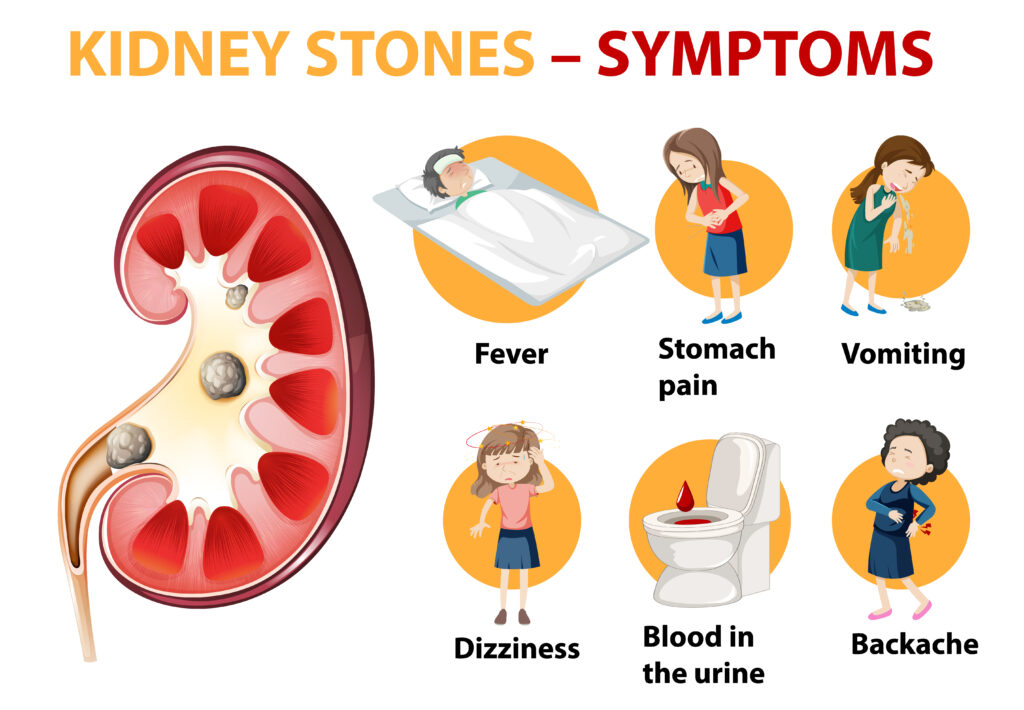
When people feel pain near their kidneys, stones are not the only cause.
Other possible causes include:
| Condition | Description | Typical Symptoms |
| Kidney Stones | Hard mineral deposits blocking urine flow | Severe side/back pain, blood in urine |
| Kidney Infection (Pyelonephritis) | Bacterial infection of kidneys | Fever, chills, back pain, burning urine |
| Hydronephrosis | Swelling due to blocked urine | Flank pain, urinary problems |
| Polycystic Kidney Disease (PKD) | Genetic cysts in kidneys | Dull aching pain, high blood pressure |
| Muscular or Spinal Pain | Back or side muscle strain | Pain worsens with movement |
Understanding the cause of the pain is crucial to treat it correctly. Never ignore ongoing back or side pain thinking it’s just muscular.
Spotlight: Kidney Stones – A Hidden Threat You Can’t Ignore
Among all kidney problems, kidney stones are the most common – and often the most painful.
What are they?
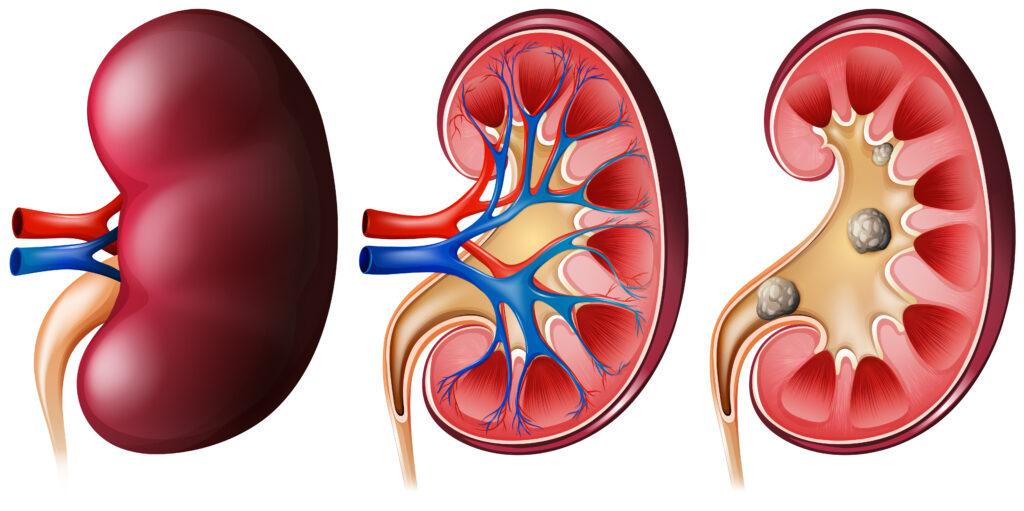
Kidney stones are hard deposits of minerals and salts that form inside your kidneys when your urine becomes too concentrated.
Normally, substances like calcium, oxalate and uric acid dissolve easily in urine. But when there is too little water or too much waste, these particles crystallize, stick together and form stones.
Some stones are tiny enough to pass unnoticed. Others grow larger, blocking your urinary tract and causing severe, sharp pain that often needs medical attention.
Types of Kidney Stones:
- Calcium Stones: The most common type, usually in the form of calcium oxalate.
- Uric Acid Stones: Form in people who lose too much fluid or have a high-protein diet.
- Struvite Stones: Associated with urinary tract infections.
- Cystine Stones: Rare and occur in people with a hereditary disorder
Risk Factors for Kidney Stones
- Not drinking enough water
- High salt, sugar or oxalate-rich diet
- Family history of stones
- Being overweight
- Certain medical conditions like gout
What Size Are Kidney Stones?
Kidney stones can range from the size of a grain of sand to as large as a golf ball. The size of the stone matters a lot in deciding how it should be treated.
- Less than 5 mm: Often pass on their own with plenty of water and some medication. Still, they can be very painful.
- 5 to 10 mm: May need medical assistance to pass or may require non-invasive treatments.
- 10 to 20 mm: Less likely to pass naturally; intervention is usually needed.
- Above 20 mm: Too large to pass and may block the kidney. Surgery or other procedures are almost always required.
Treatment Options Based on Stone Size
At Rashtrotthana Hospital, we offer advanced treatment approaches based on the stone’s size and location:
Small Stones
- Hydration (2–3 liters of water/day)
- Pain management
- Medications to relax the ureter and help pass the stone
Medium to Large Stones
- Shock Wave Lithotripsy (SWL): Breaks stones into smaller pieces using sound waves
- Ureteroscopy: Uses a thin scope inserted into the bladder and ureter to remove or break the stone
- Percutaneous Nephrolithotomy (PCNL): For very large stones, where a small incision is made in the back to remove the stone directly
Can Small Stones Be Ignored?
* Stones smaller than 4 millimeters are often able to pass naturally through urine with adequate hydration and time.
* They may not require any surgical procedure unless they cause unbearable pain, infections or a blockage.
* However, even small stones need regular monitoring to ensure they don’t grow or move dangerously.
Ignoring even a small stone without a doctor’s follow-up can lead to unexpected emergencies later.
What Happens If Kidney Stones Are Left Untreated?
Serious complications can arise:
- Blockage of urine flow leading to kidney swelling (hydronephrosis)
- Recurrent urinary tract infections (UTIs)
- Chronic kidney disease due to long-term damage
- Permanent kidney damage if infections or blockages are not addressed in time
- Sepsis, a life-threatening infection if bacteria enter the bloodstream
Prompt evaluation and management can prevent these risks.
How to Keep Your Kidneys Healthy
Prevention is the best treatment.
Simple daily habits can significantly reduce your risk:
- Stay Hydrated: Aim for 2–3 liters of water daily unless restricted medically.
- Balanced Diet: Lower salt intake, limit processed foods and high-oxalate foods (like spinach and nuts).
- Maintain Healthy Weight: Exercise regularly.
- Manage Medical Conditions: Especially diabetes, hypertension and gout.
- Don’t Ignore Symptoms: Seek medical advice early for any urinary or back pain issues.
Affordable Kidney Stone Care at Rashtrotthana Hospital
At Rashtrotthana Hospital, Rajarajeshwari Nagar, we bring together the combined expertise of our urology and nephrology departments to offer complete and affordable care for kidney stones. Whether you’re dealing with a small stone or facing complications like infection, blocked urine flow or recurrent pain, our team ensures precise diagnosis, safe treatment and long-term guidance.
Our care is strengthened by experienced specialists in:
- Stone disease and EndoUrology, including advanced procedures like URS and PCNL
- Kidney transplantation, laparoscopic urology and reconstructive interventions
- General nephrology, diabetic kidney disease, glomerular conditions and dialysis support
- Management of resistant hypertension and kidney disorders during pregnancy
With over a decade of clinical experience, our experts take a patient-first approach – blending clinical precision with empathy.
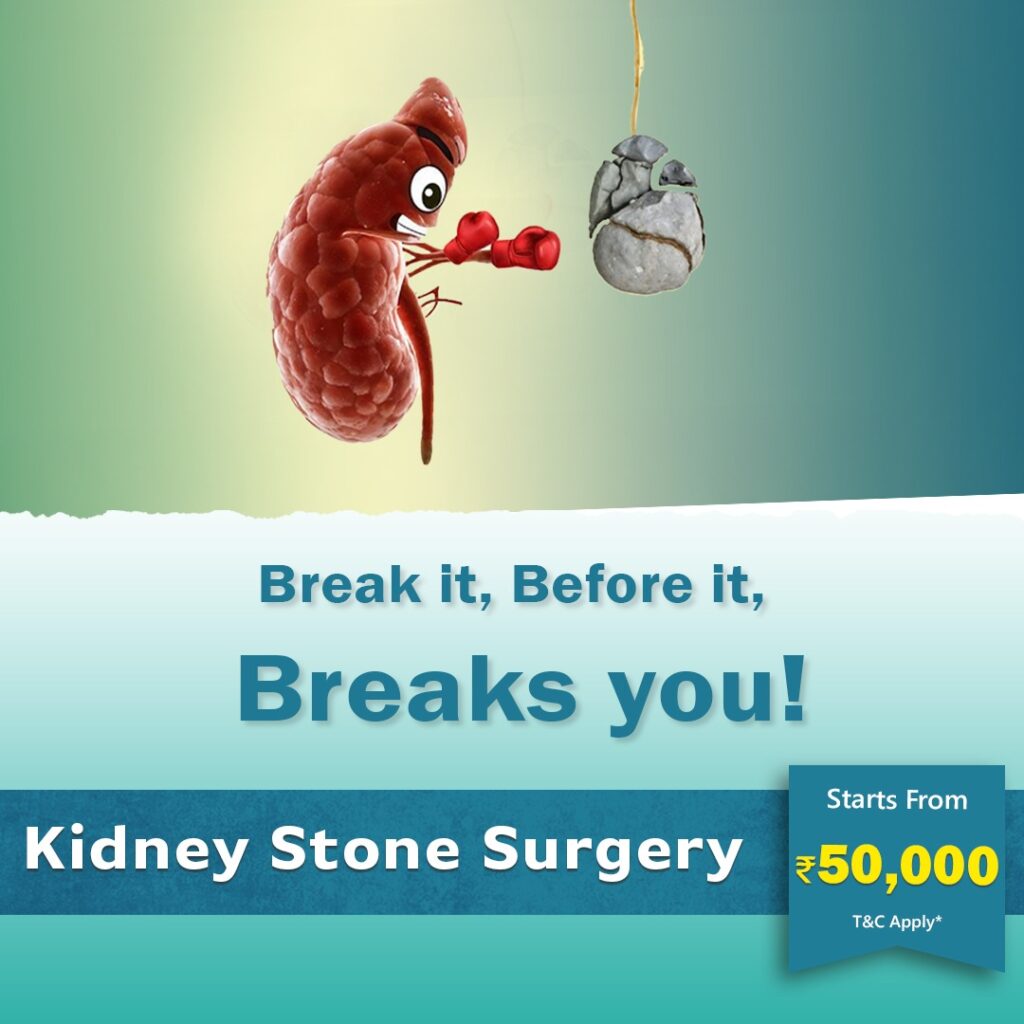
Affordable Kidney Stone Surgery Packages Starting at ₹50,000
At Rashtrotthana Hospital, we are committed to providing top-tier care at an accessible cost. Our kidney stone surgery packages start at ₹50,000, ensuring you receive comprehensive treatment with advanced medical techniques while keeping your treatment affordable. We focus on delivering the highest standard of care without compromising on quality, so you can trust us to support you throughout your recovery.
Conclusion: Silent Doesn’t Mean Safe
Kidney stones are fast becoming one of India’s most overlooked health threats. Behind everyday complaints like back pain, stomach discomfort or urinary troubles, a hidden danger could be forming silently. By 2025, nearly 12% of the Indian population – close to 168 million people – are expected to experience kidney stones. Among them, men are at higher risk, with around 15% of men (approximately 90 million) likely to be affected, compared to 8% of women (about 60 million). Alarmingly, even 2–3% of children and adolescents (nearly 18 million young individuals) are now at risk, highlighting how kidney stones are no longer limited to older adults.
Modern lifestyles filled with processed foods, excess salt and sugar intake, inadequate water consumption and sedentary routines are driving this hidden epidemic. Kidney stones are no longer just an adult’s problem – they’re impacting teenagers, young professionals and families alike.
If you experience any signs of kidney trouble or have a family history of kidney stones, consult our specialists at Rashtrotthana Hospital for timely treatment.
Leave a Reply