
Ayurveda, the science of life, views health as a state of balance between the body, mind and senses. Among its many therapeutic interventions, Nasya Karma holds a unique place – especially in conditions affecting the head, sinuses, respiratory system and nervous system.
Nasya Karma is a classical Ayurvedic nasal therapy that supports detoxification, rejuvenation and neurological balance. When administered correctly, it becomes a powerful tool for both treatment and prevention. At Rashtrotthana Hospital, Nasya Therapy is offered as part of structured Ayurvedic care, guided by qualified practitioners and integrated with overall health assessment.
What Is Nasya Karma?
Nasya Karma is an Ayurvedic procedure in which medicated oils, ghee or herbal extracts are gently administered through the nasal passages under professional supervision.
In Ayurveda, the nose is described as the gateway to the brain (Shiras). Because of this direct connection, Nasya Karma is especially effective for disorders related to:
- Sinuses and nasal passages
- Head and neck region
- Eyes, ears and throat
- Brain and nervous system
This therapy is commonly recommended as part of Panchakarma, Ayurveda’s structured detoxification and restorative protocol.

Importance of Nasya Karma in Ayurveda
Classical Ayurvedic texts describe Nasya as one of the five Panchakarma therapies, designed to cleanse and balance the body at a deeper level.
Nasya Karma helps to:
- Clear accumulated toxins from the head region
- Strengthen neurological and sensory functions
- Balance Vata, Pitta and Kapha doshas
- Improve circulation and nourishment to cranial tissues
It is frequently advised for conditions such as sinusitis, migraines, allergies, stress-related disorders and certain neurological concerns.
How Nasya Karma Works
Nasya Karma acts on the Shirovirechana Srotas – the functional channels of the head. By introducing medicated substances through the nasal route, the therapy:
- Removes excess mucus and toxins
- Lubricates dry nasal and sinus tissues
- Supports brain nourishment
- Improves cognitive and sensory function
It can be used therapeutically or as a preventive measure to maintain long-term health.
Nasya Karma Procedure: Step-by-Step
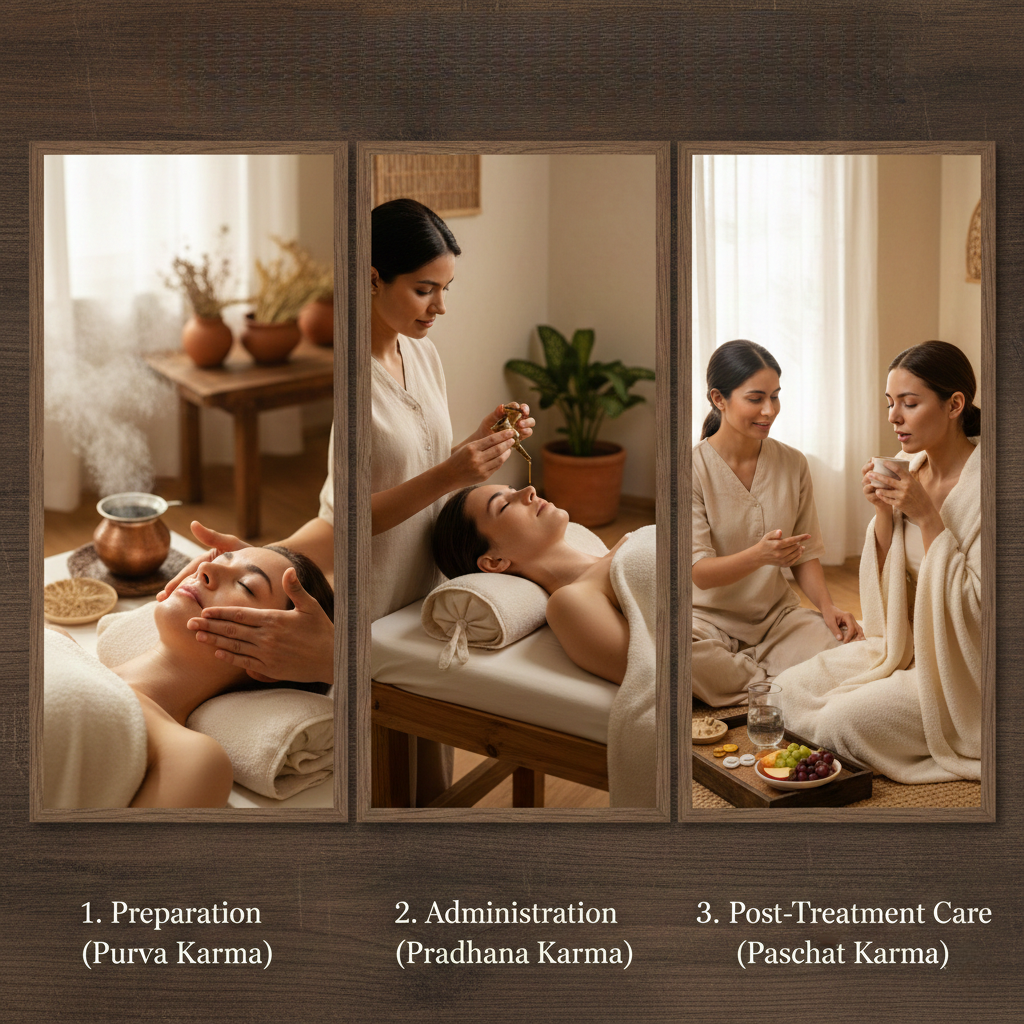
1. Preparation (Purva Karma)
The therapy begins with gentle facial massage and mild steam to loosen toxins and open the nasal passages. This step prepares the body to receive the medication effectively.
2. Administration (Pradhana Karma)
The individual lies comfortably with the head slightly tilted back. Carefully selected medicated oil or herbal preparation is administered into each nostril in measured doses.
The medicine is inhaled gently, allowing it to reach deeper nasal and cranial pathways.
3. Post-Treatment Care (Paschat Karma)
After the procedure, rest is advised. Gargling and specific dietary guidance may be recommended to support absorption and enhance the therapeutic effect.
Types of Nasya Karma
Nasya is not a uniform therapy. The type is selected based on the individual’s constitution, condition and treatment goals.
- Virechana Nasya – Cleansing therapy using herbal powders or strong formulations
- Bruhana Nasya – Nourishing therapy using medicated ghee or oils
- Shamana Nasya – Palliative therapy to reduce inflammation and irritation
- Navana Nasya – Oil-based therapy commonly used for neurological conditions
- Pratimarsha Nasya – Mild daily nasal application for preventive care
A qualified Ayurvedic physician determines the appropriate type and dosage.
Role of Nasya Karma in Dosha Balance
Nasya Karma helps regulate all three doshas:
- Vata Dosha – Supports neurological health, reduces dryness, insomnia and anxiety
- Pitta Dosha – Helps manage inflammation, headaches, dizziness and irritability
- Kapha Dosha – Clears congestion, heaviness, sinus blockage and respiratory issues

Health Benefits of Nasya Karma
Nasya therapy is known for its wide-ranging benefits, particularly for the head and respiratory system.
Key benefits include:
- Relief from sinus congestion and allergic rhinitis
- Improved breathing and nasal clarity
- Better memory, concentration and mental clarity
- Reduction in headaches and migraine frequency
- Calming effect on stress and anxiety
- Improved sleep quality
- Support for overall respiratory health
Conditions Where Nasya Karma Is Commonly Recommended
- Chronic sinusitis and nasal congestion
- Recurrent headaches or migraines
- Stress and anxiety-related disorders
- Sleep disturbances
- Facial nerve conditions
- Hair fall and premature greying linked to dosha imbalance
Pratimarsha Nasya: Daily Preventive Care
For long-term wellness, Ayurveda recommends Pratimarsha Nasya – a daily, low-dose nasal oil application.
Using medicated oils such as Anu Taila under guidance can help:
- Prevent dryness of nasal passages
- Reduce allergy susceptibility
- Support respiratory immunity
- Maintain clarity of senses
This simple routine is especially beneficial for people exposed to pollution, screen fatigue and irregular lifestyles.
Why Seek Professional Guidance for Nasya Karma?
While Nasya appears simple, incorrect selection, dosage or timing can reduce its effectiveness or cause discomfort. Professional evaluation ensures that the therapy is:
- Safe
- Personalized
- Clinically appropriate
- Integrated with overall health management
At Rashtrotthana Hospital, Ayurvedic care is practiced within a structured, ethical and evidence-informed framework – ensuring both traditional authenticity and patient safety.
Still Reading? That’s a Good Sign.
It usually means your body is asking for better balance.
Enquire about Nasya Therapy and understand how Ayurvedic care can support your sinus, sleep and mental clarity concerns.
Leave a Reply